Impressionism: Painting the Fleeting Moment
Monet, Renoir, Degas, and their circle took painting outdoors and discovered that light never holds still.

A New Way of Seeing
In 1874 a group of French painters, rejected by the official Salon, mounted their own independent exhibition in a photographer's studio on the Boulevard des Capucines. Critics mocked them, borrowing the word "impressionism" from Claude Monet's "Impression, Sunrise" (1872) as a term of dismissal. Within two decades the movement had transformed the history of Western art.
The Impressionists were not primarily interested in classical subjects or careful finish. They wanted to capture the quality of light at a specific moment — the shimmer of afternoon sun on water, the blur of a café crowd, the blue shadows on snow — before the moment passed.
The Core of the Movement
Claude Monet pursued this ambition with something close to scientific obsession. His serial paintings — haystacks, Rouen Cathedral, the Thames, water lilies — record the same motif under different conditions of light and atmosphere, demonstrating that the "same" subject is in fact endlessly different. The late water-lily canvases, painted in the garden at Giverny, dissolve representation into shimmering fields of color that anticipate abstraction.


Camille Pissarro was the movement's quiet conscience: older than most of the group, committed to plain-air landscape across a long career, and generous in his support of younger painters including Cezanne and Gauguin. His market scenes and village streets have a social warmth that distinguishes them within the movement.
Renoir, Manet, and Degas
Pierre-Auguste Renoir brought a sensuous attention to light on skin and fabric. "Luncheon of the Boating Party" (1880–81) captures a particular quality of leisure — dappled afternoon light, animated conversation, the physical pleasure of being alive in good company — with a directness that still feels immediate.
Edouard Manet stands slightly apart: older, more anchored in the Old Masters, he nonetheless scandalized the Salon with "Olympia" (1863) and "Le Dejeuner sur l'herbe" (1863), which brought the nude out of mythology and into uncomfortable contemporaneity.
Edgar Degas worked primarily in the studio, drawing obsessively from dancers, bathers, and café habitues. His compositions are cropped like photographs, figures caught off-center, the viewpoint unexpected. The effect is voyeuristic, urgent, and technically extraordinary.

On Mojud you can browse the full range of Impressionist painting — landscapes, portraits, urban scenes, domestic interiors — view them up close, download them for free, or order fine-art prints for your home.
The Impressionist Legacy
The movement loosened the entire apparatus of academic painting: the insistence on finish, on historical or mythological subject matter, on studio-controlled light. Every subsequent development — Post-Impressionism, Fauvism, early Modernism — builds on or reacts to what Monet and his circle discovered beside the Seine.
Living with Impressionism
Few movements reproduce as well as Impressionism. The visible brushwork, the color relationships, the scale — a Renoir garden or a Pissarro boulevard can fill a room with light and warmth without demanding anything of the viewer except attention. Mojud offers a wide selection of Impressionist works in high resolution, ready to download or print at the size that suits your space.
 Tranquil Pond (Egelsee near Golling, Salzburg) · 1899
 Charing Cross Bridge, Reflections on the Thames · 1899
 Consolatrix Afflictorium · 1899
 Detail of The Water-Lily Pond · 1899
 Painting · 1899
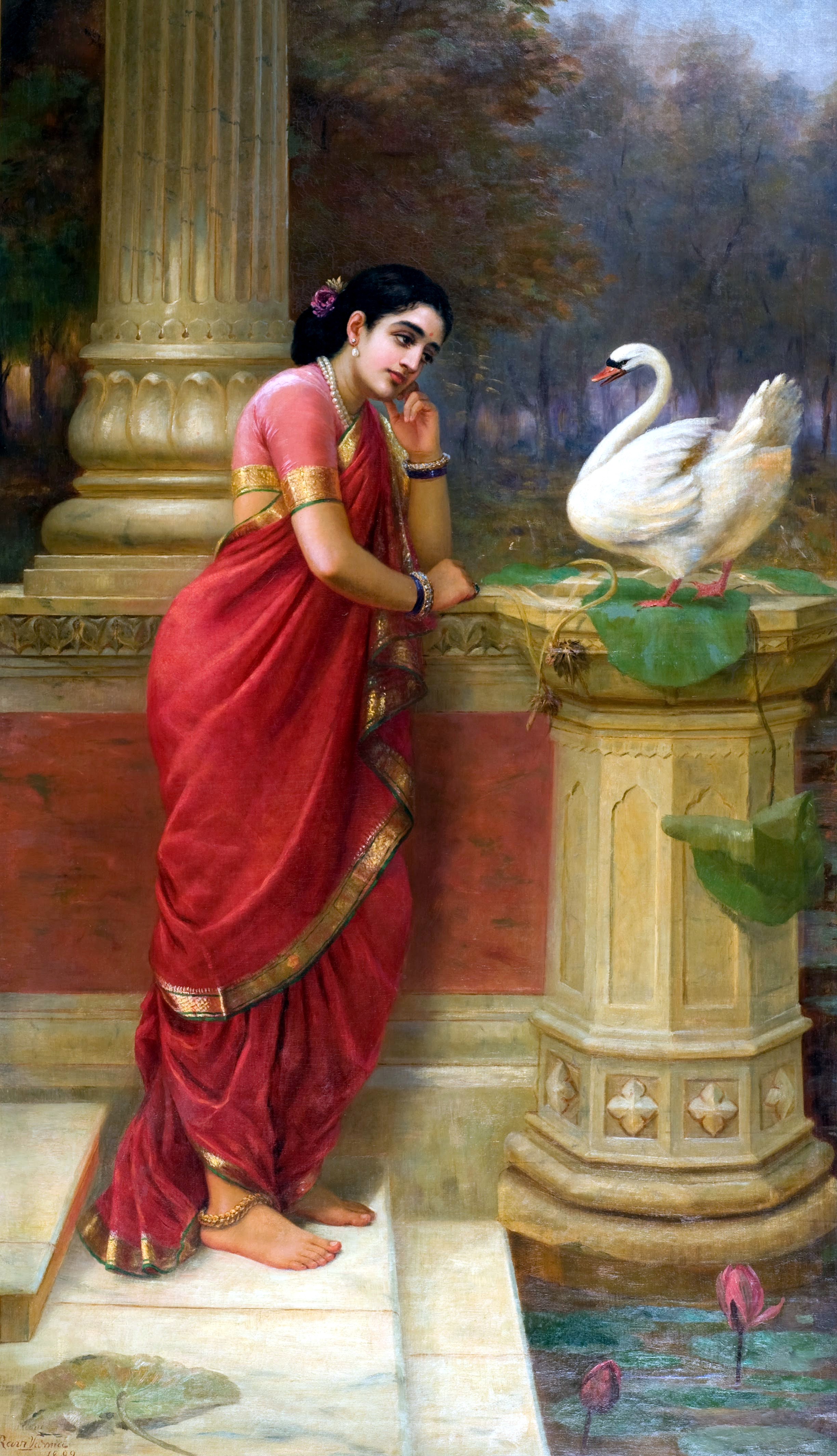 Hamsa Damayanti · 1899
 Serena Pulitzer Lederer (1867–1943) · 1899
 The Japanese Footbridge and the Water Lily Pool, Giverny · 1899


- Paul Gauguin: Colour, Myth, and the Edge of the WorldArtist
- Vincent van Gogh: A Life Burned BrightArtist
- Claude Monet: Light, Water, and the Invention of ImpressionismArtist
- Raja Ravi Varma: The Painter Who Gave India's Gods a Human FaceArtist
- Édouard Manet: The Scandal That Made Modern ArtArtist
- Amrita Sher-Gil: The Painter Who Bridged Two WorldsArtist